Taking a moment here to wonder… how on earth has half of this year gone by already?! Just had this conversation with one of my managers the other day, and she said, “Yes, before you know it, Christmas is going to be here soon!”, to which I laughed (but considering how quickly these first six months have flown by, maybe it really won’t be long before we start hanging up ornaments and seeing those Starbucks holiday cups in the hands of every millennial around...). Considering the stretch of time, a lot has happened since the last post on Valentine’s Day dates (that’s right, no sugary milk chocolates here!), including my big life decision to commit to grad school! I’ve been interested in nutrition for a while and earlier this year, I finally found a program that is a great fit 😄 Unfortunately, the life passion that I have now in the health field didn’t occur to me in my budding undergraduate years, which led to my graduating with a BA in political science. Now, although it has the word “science” in it, political science has absolutely nothing to do with any hard sciences, a background that I lack and is required for higher education in nutrition at the masters level.
That being the case, I am now taking a prerequisite introductory course to nutrition that covers the foundational knowledge in biology, chemistry, human physiology-- and I’ve never loved studying more!! *inner nerd hops around with joy* It’s so fascinating to learn about how the human body is ingeniously constructed to absorb what we eat, heal on its own, fend off infections, and also alert us with symptoms when something is off with our health. The funny thing is, all this stuff happens inside without us voluntarily telling our body what to do! The only role we have to play is to put good fuel into our body for all the tiny cells, organs, and systems to carry out their operations to keep us alive and functioning-- that is probably as easy as it gets.
The aspect of nutrition that appeals to me the most, however, is that it is the core of such an easy and available prevention method that we can use to avoid getting sick! I work in a health-related agency and it’s a little sad to see people taking multiple medications for different chronic health conditions, and it’s a known fact that the great majority of the health conditions that we fight against here in the United States are autoimmune ones. While a good part of autoimmune diseases can be genetic, the other half is also contingent on diet and lifestyle. Meaning, nutrition plays a huge part in dictating your health and happiness! At the same time, nobody really thinks much of this nowadays-- food-wise, in a world where instant gratification is king, anything that’s fast, portable, tasty, and cheap wins the hearts of many Americans. Only over a period of time as signs of aging come about, do people realize that all these health complications don’t bode well for them, and all that junk they’ve been eating might be at least partially to blame...
Speaking of junk, last week’s readings covered the topic of lipids/fats, specifically TRANS FAT and how it is in so many food products out there-- yet people don’t really know how detrimental it is for our health! You might ask, What is it, and why is it so bad? Essentially, it is an artificially created fat that is produced by adding hydrogen to liquid vegetable oil to make them solid (hence the common name for trans fat being “hydrogenated oil”). It’s bad because once it’s inside your body, trans fat raises your LDL bad cholesterol and lowers the good HDL cholesterol (there's a whole chemical explanation behind this, but I won't bore you with that). Over time, as more and more of these food products with trans fats are consumed, arteries get clogged due to the trans fats and that’s simply the brewing of a disaster: HEART DISEASE.
So then why are trans fat still widely used in food production? Because it’s cheaper than saturated fats like butter (many restaurants use hydrogenated oil to make fried foods because it’s cheaper), and hydrogenated oil also does the job of preserving foods for long periods of time.
Right, so everything has a back-story: How long has hydrogenated oil been used in food products, and what is its origin? The use of trans fats first came about during World War II, when food sources were scarce, and rare commodities like butter were rationed out at the time. They needed something that would satiate and taste as good as butter but produced at a cheaper cost, and thus the production and incorporation of hydrogenated oil in foods came about. Of course, at the time, no one really knew about the health effects-- more people were coping with malnutrition at the time and any source of fat would have been welcomed.
Ok, so now we know what trans fats are, why they’re bad, and even their history. So the next question is, what foods have trans fat? How will I know what foods to watch out for? Trans fats are found in margarine, fried foods, and processed/packaged foods like chips, crackers, snack cakes like Twinkies, packaged baked goods, even those containers of cake frosting-- basically anything that you know to be processed food! Unfortunately, this might include some vegan meatless products too; all those faux meat/mock meat products like meatless meatballs, sausages, veggie burgers (UGH WHY) vegan "cheese" and even vegan ice cream could have trans fat and other processed fillers in them. So the next time you’re getting groceries, double check the ingredients list of packaged foods to see whether “hydrogenated oil” or “partially hydrogenated oil” or anything hydrogenated is listed as an ingredient. Not only that, but if the percentage of trans fat is also high, put that box or bag right back on the shelf! This isn't to say that there's nothing left in the world to eat; obviously the occasional ice cream treat or a side of fries isn't going to kill you, but the key is to stick to whole foods as much as possible.
You might think at this point that this is just way too much work. Making trips to the market to get food is already such a chore, and now we have to meticulously check the back of everything before we chuck it in our cart?
Well, fear not, because...
Luckily, we have good ol’ Professor Fred A. Kummerow to thank for the FDA ban placed on these artificial trans fats that will go into effect starting 2018, which is next year! Meaning pretty soon, we won’t have to worry and fret over checking for trans fats because it won’t be allowed in the U.S. food supply. This is a huge change and a shake-up of the powerful food industry, and all of this was done by one man, Professor Kummerow, and his six decades’ worth of research, countless journal articles, advocacy, and dedication to work tirelessly for the health and welfare of the American people. In trying to create awareness and voice an early warning about the negative health implications of trans fat/processed foods, he fought a lonely battle for the longest time; no one else believed him back in the 1950s and the food industry did not pay heed either. When you are right, however, justice does its job: over the years, many other researchers who were coming around to uncover similar findings published their studies, and once the common knowledge about trans fats could no longer be ignored, Professor Kummerow decided enough was enough and he sued the FDA in 2013 for not taking action any sooner (this eventually led to the FDA’s announcement of the trans fat ban in 2015, giving food production companies 3 years to shape up and eliminate trans fats from food products by 2018). Talk about determination! Just goes to show, if you firmly believe in something and push for it all the way, nothing can stop you from achieving!
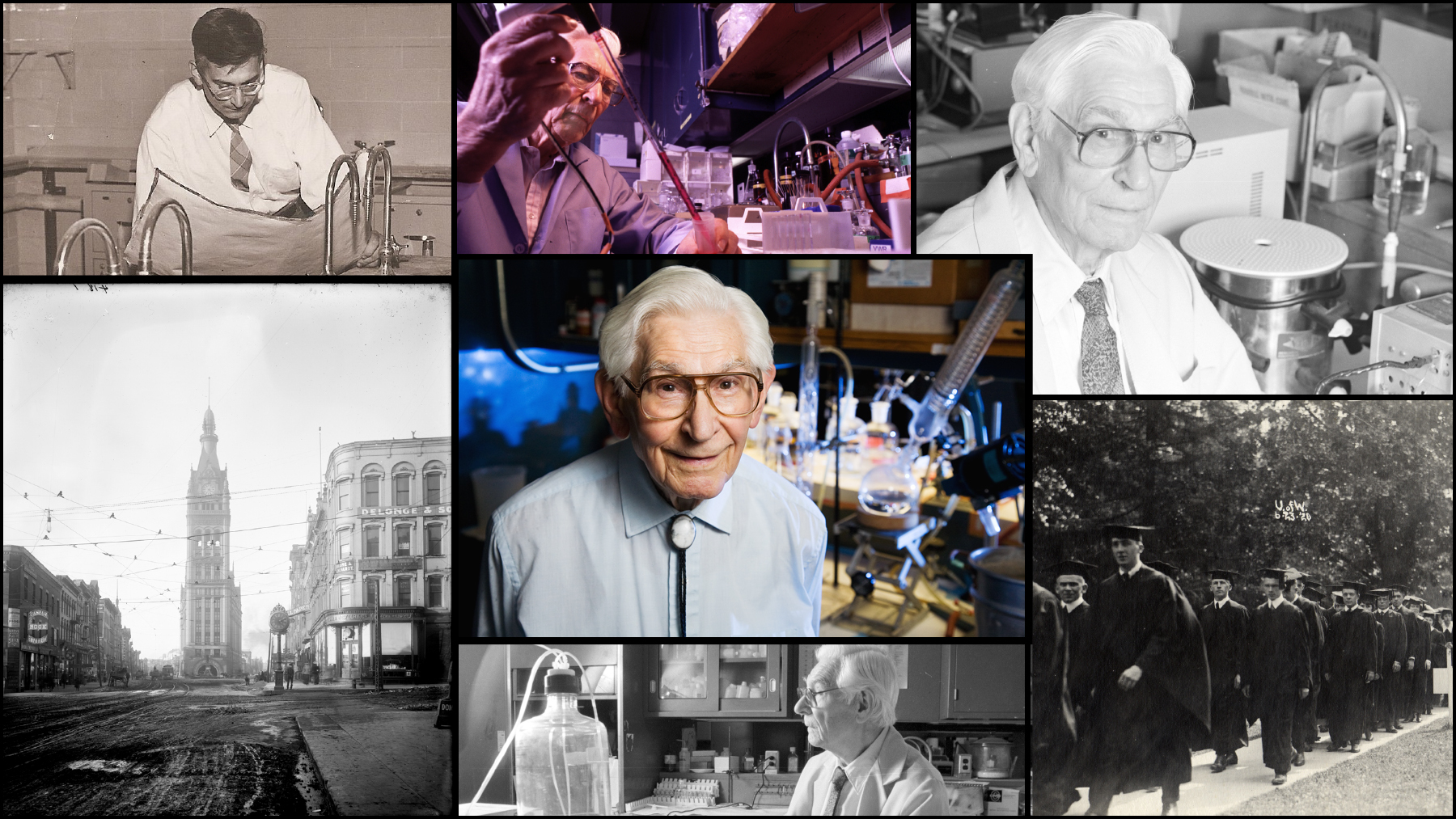
That’s why this post is actually a tribute to Professor Kummerow, who just passed away last Wednesday on May 31, 2017 at the age of 102 after having achieved these life accomplishments. Knowing what he knows about nutrition, he must have taken really good care of his health to have lived that long! Professor Kummerow was also the world’s oldest working scientist: even at the age of 101, he was still working hard at his lab to find a link between diet and Alzheimer’s disease. Needless to say, retirement was definitely not in his later life plans! He was truly a visionary and a pioneer as a scientist and nutritionist, and for a newbie like myself with my toe not even barely dipped into this amazing field, Professor Kummerow is probably my greatest inspiration at the moment. May he rest in peace.
Here are articles from the New York Times and Chicago Tribune that pay homage to the man:


